Steps with risers that match, treads that grip and a footing that keeps them from leaning
The crumbling front stoop and the step that has pulled away from the porch are two of the most common calls we take in Greer's older neighborhoods. New steps get a footing, reinforcement and consistent risers; the ones that have only settled get lifted; the ones that have broken get replaced.
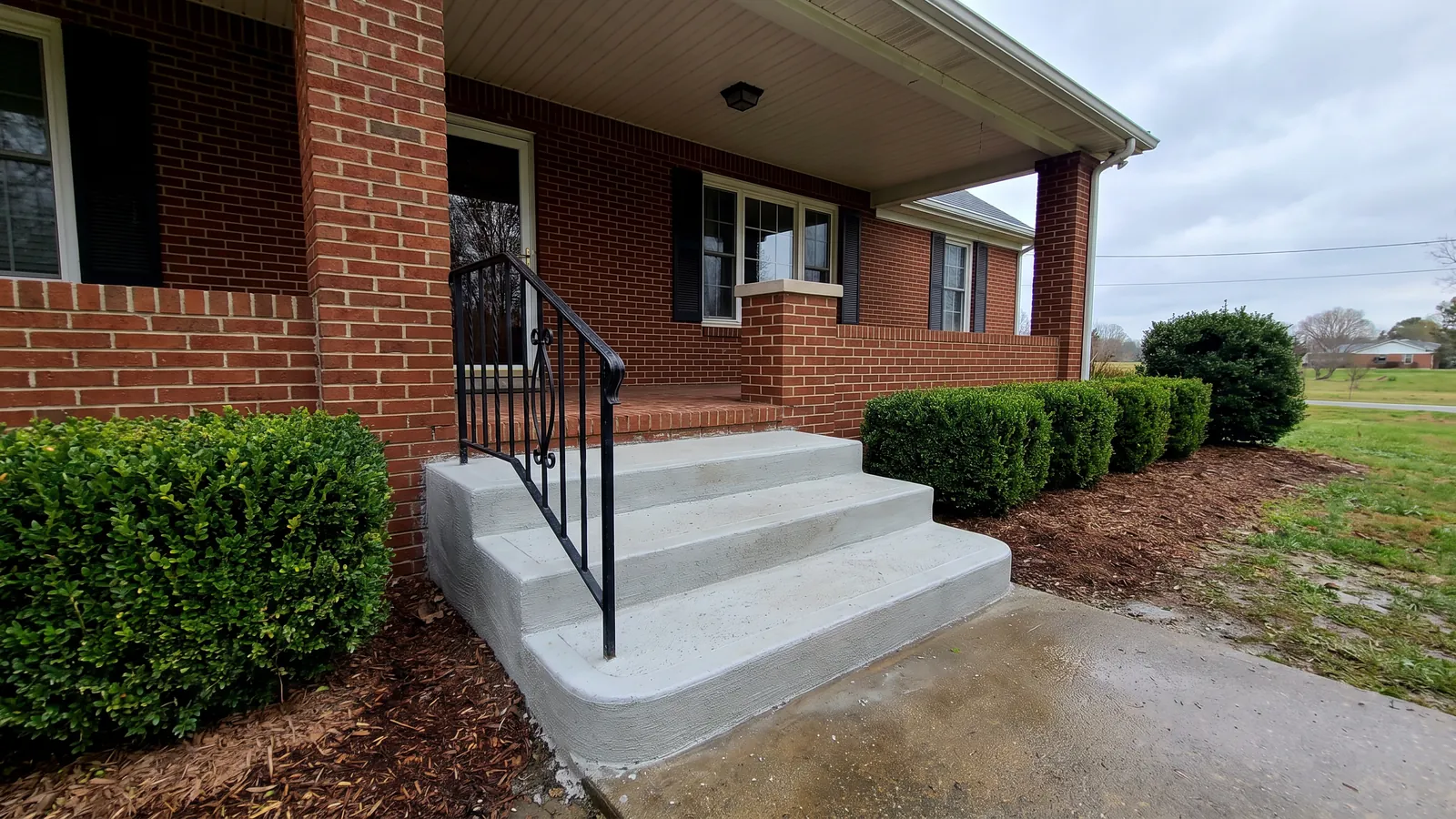
Steps are small jobs that are easy to get wrong. A riser that is half an inch taller than the others is a trip hazard people stumble on for years. A stoop poured on dirt settles away from the porch and opens a gap that fills with water and ice. A tread with a smooth trowel finish turns slick on the first wet morning. And a set of steps with no footing on a sloped lot slowly leans downhill. All of that is avoidable with the same care we give a slab: a footing or a compacted stone base, rebar through the steps and tied into the landing, risers set to a consistent height, treads with a slight forward pitch so water runs off, and a broom finish for grip.
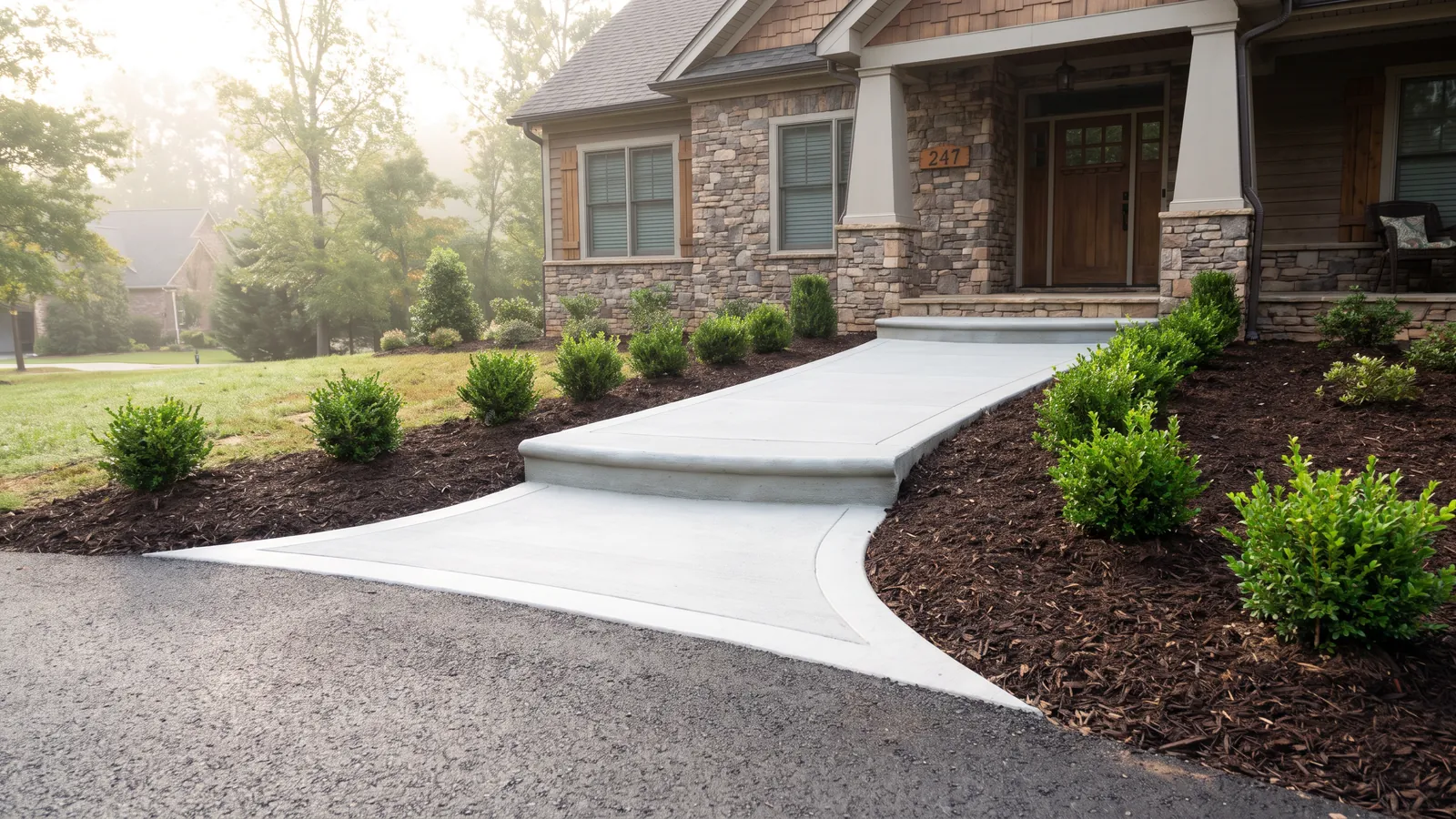
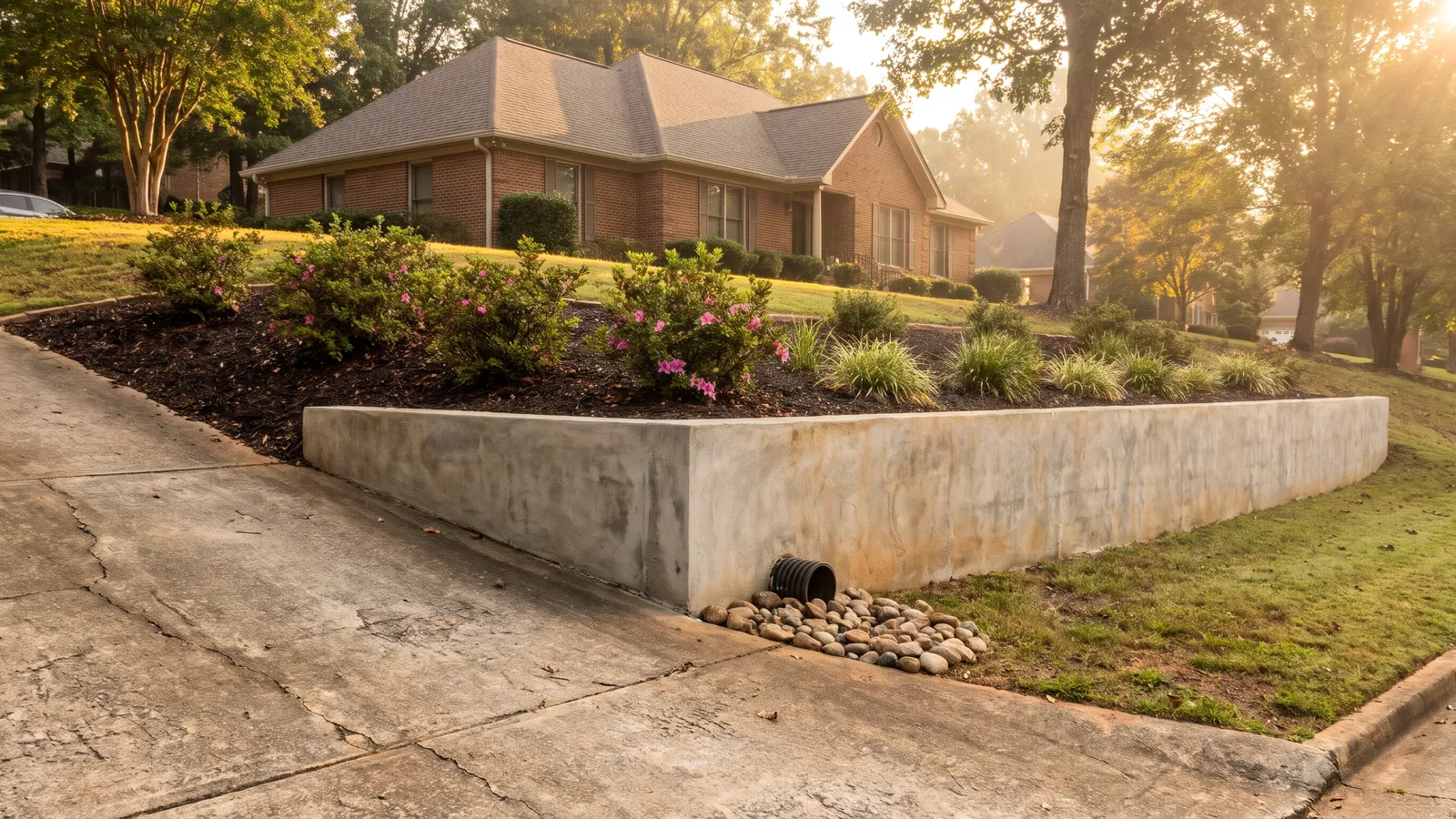
We pour new front and side steps, from a single step at the back door to a full flight with a landing, in plain concrete or to match a stamped or colored walk. We replace crumbling stoops, breaking out the old steps, fixing the base that let them fail and pouring new ones tied to the porch. We build steps into walkways and retaining walls on the sloped front yards around Greer, where the path from the driveway to the door needs two or three steps partway along. And we repair steps worth saving: spalled nosings rebuilt, cracked treads patched, and steps that have settled as a unit lifted with foam rather than torn out.
Where a set of steps is part of a code-regulated entry, such as a new front entrance on a new home, riser height, tread depth, landing size and handrail requirements come from the building code and we build to them. For most replacement stoops no permit is involved, though we match the existing rise so the door threshold works. The estimator measures the total rise and run on site and lays out the number of steps and riser height before anything is priced.
What the job includes
Consistent risers
Total rise divided evenly, measured from the finished landing to the finished walk, so every step is the same height.
Footing or base
A footing below the frost line on sloped or loaded steps, a compacted stone base on simple stoops; never dirt.
Reinforced and tied in
Rebar through the step mass and dowels into the porch or landing so the steps and the house move together.
Treads that drain and grip
A slight pitch on each tread and a broom finish, with rounded nosings that do not chip.
Matched to the walk
Poured with or alongside a new walkway, in the same finish, plain or decorative.
Repair where it makes sense
Spalled edges rebuilt and settled steps lifted when the steps are sound; replacement priced plainly when they are not.
Concrete steps prices in Greer, SC
| Work | 2026 range | What changes it |
|---|---|---|
| Poured concrete steps, 3 to 5 risers | $300 – $2,000 | Width, number of steps, landing and footing |
| Single step or small back-door stoop | Toward the low end | Often done with another job |
| Full front entry with landing | Toward the high end | Rails, finish and footing |
| Steps built into a walkway or wall | Priced with the walk or wall | See retaining walls |
| Spall or nosing repair | Priced on inspection | Number of edges |
| Lifting settled steps with foam | Priced on inspection | Usually far cheaper than replacement |
| Stamped or colored finish on steps | Added | To match a decorative walk |
Budgeting ranges for the Upstate in 2026, drawn from current contractor cost guides. Your figure is written after the estimator has measured the site and checked the ground, and it is itemized so you can see where the money goes.
On site
Concrete steps questions, answered
What is a comfortable step height?
Around seven inches of rise with an eleven-inch tread is the common standard for exterior steps and is what the building code expects on a regulated entry. We measure the total rise and divide it evenly so there is no odd step at the top.
My stoop has pulled away from the house. Can it be fixed?
If the steps are in one piece and have simply settled, foam lifting closes the gap. If they have cracked or the base has washed out, they are replaced on a proper base and doweled to the porch.
Do you install handrails?
We set the sleeves or anchors for a rail into the steps and can arrange the rail itself. A rail is required by code on some entries, and the estimator will say if yours is one.
Can the steps be stamped to match my patio?
Yes. The risers and treads take the same color and a matching texture, with a broom or grit finish on the treads for grip.
Do you repair precast steps?
Precast units that have settled can be lifted and re-set; broken ones are usually replaced with poured steps tied to the house, which do not settle the same way.
How long until I can use new steps?
Foot traffic after a day or two; give them the full cure the estimate specifies before any heavy use or a sealer.